
Anna Folkema (1695-1768)


Tal día como hoy, el 22 de mayo de 1695, fue bautizada en Dokkum (Frisia) la grabadora y dibujante neerlandesa Anna Folkema.
Fue hija del grabador y orfebre Johannes Jacobsz. Folkema (?-1735) y de su segunda esposa Brechtje Faber (?-1728).
Anna se formó en el taller paterno junto con su hermano, el grabador Jacob Folkema (1692-1767), y su hermana, la grabadora Fopje Folkema (1690-1752).
En 1708 la familia se mudó a Ámsterdam y se instalaron en la plaza Westermarkt.
Anna nunca contrajo matrimonio, dedicó su vida a trabajar en el taller paterno y después en el de su hermano, por este motivo es difícil atribuir la autoría de sus obras dado que solían trabajar los tres hermanos juntos en los mismos proyectos.
Además del grabado calcográfico y el aguafuerte, Anna Folkema dominó otras técnicas de dibujo como el grafito, el gouache, la acuarela y la pintura en miniatura.
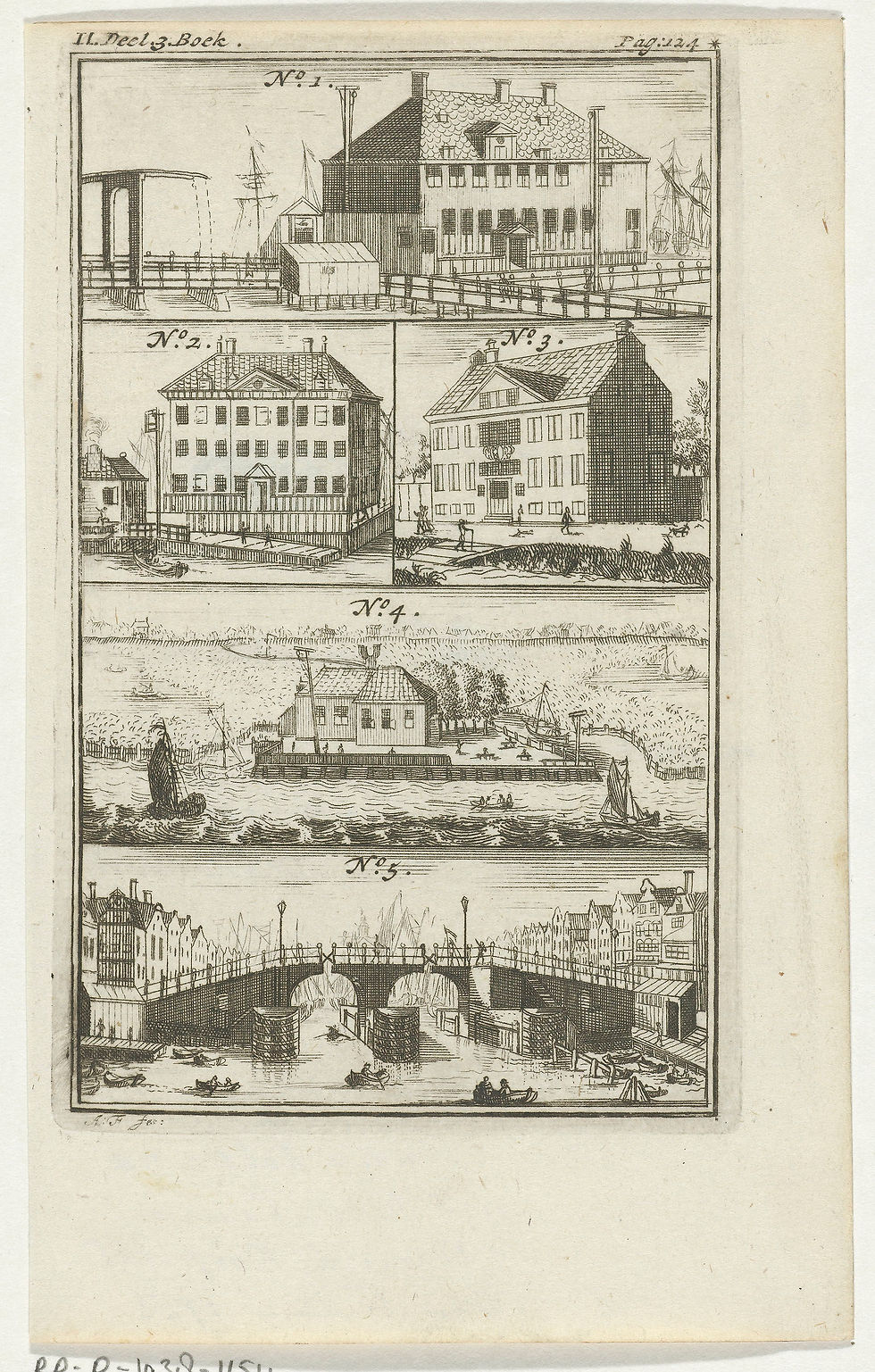
Sus trabajos más destacados son los retratos que realizó por encargo de personas ilustres y una serie de vistas arquitectónicas y urbanas de Ámsterdam.
Murió el 8 de Octubre de 1768, un año después que su hermano, y fue enterrada en la conocida iglesia de Westerkerk.
La mayoría de su obra se conserva en el Rijksmuseum en Ámsterdam.
On this day, 22 May, 1695, the Dutch engraver and draughtswoman Anna Folkema was baptized in Dokkum, Friesland.
She was the daughter of the engraver and goldsmith Johannes Jacobsz. Folkema (d. 1735) and his second wife, Brechtje Faber (d. 1728). Anna trained in her father's workshop alongside her brother, the engraver Jacob Folkema (1692–1767), and her sister, the engraver Fopje Folkema (1690–1752). In 1708, the family moved to Amsterdam and settled in the Westermarkt square.
Anna never married, devoting her life to working first in her father's workshop and later in her brother's. For this reason, attributing individual authorship to her works is challenging, as the three siblings frequently collaborated on the same projects.
In addition to copperplate engraving and etching, Anna Folkema mastered other drawing techniques such as graphite, gouache, watercolor, and miniature painting. Her most outstanding works are the commissioned portraits she made of prominent figures, as well as a series of architectural and urban views of Amsterdam.
She died on 8 October 1768, one year after her brother, and was buried in the famous Westerkerk church.
The majority of her oeuvre is preserved today at the Rijksmuseum in Amsterdam.




Comentarios