
Ione Robinson (1910-1989)

Actualizado: 25 ago

Tal día como hoy, el 3 de octubre de 1910, nació en Portland (Oregon) la pintora y fotógrafa Ruth Ione Robinson.
Fue hija de George Cornelius Robinson (1883-1951) y de Adeline Ione Bridgham (1888-1933). Tuvo dos hermanos, George C. Robinson Jr. (1909-1933) y Fred Robinson (1913-1966). La familia se trasladó a vivir a California hacia 1913.
Ione Robinson estudió en el Otis Art Institute de Los Angeles entre 1925 y 1926. En el verano de 1927 formó parte del programa "Summer Academy" de la PAFA Pennsylvania Academy of Fine Arts en Chester Springs. Ese mismo año se mudó a Nueva York y comenzó a trabajar como asistente para el diseñador de mobiliario austríaco Paul T. Frankl (1886-1958). Después continuó trabajando para el grabador Rockwell Kent (1882-1971).
A los 18 años viajó por primera vez a París en septiembre de 1928 y aprovechó su estancia en Europa para visitar Florencia y Nápoles.
En abril de 1929 inauguró su primera exposición individual en la Weyhe Gallery de Nueva York y en junio de ese mismo año se trasladó a México con el deseo de ser muralista. Para ello, logró un puesto de ayudante de Diego Rivera en la realización de sus murales al fresco “Epopeya del Pueblo Mexicano”, en el Palacio Nacional de Ciudad de México. Durante los seis meses que residió en México, Ione Robinson se alojó un tiempo en casa de la fotógrafa italiana Tina Modotti (1896-1942), que la retrató en varias ocasiones; así como Lola Álvarez Bravo (1903-1993). Estas amistades despertaron su interés por el medio fotográfico. En México conoció a su primer marido, el escritor de origen ucraniano Joe Freeman (1897-1965), del que se divorció poco después.
Ione Robinson regresó a Nueva York a finales de 1929 y en 1931 ganó una Beca de Artes Plásticas de la Guggenheim Foundation para trasladarse a México durante casi un año, hasta el mes de enero de 1932.
El 27 de marzo de 1933, cuando contaba 22 años, contrajo matrimonio en segundas nupcias con el hijo de una familia de terratenientes sureños llamado John Dallett (1902-1975). En agosto de ese mismo año, su madre y su hermano mayor fallecieron en un accidente de coche y ella quedó devastada. En 1935 nació su hija Anne Ione Dallet, al poco tiempo la pareja se separó y la niña quedó al cargo de su familia paterna.
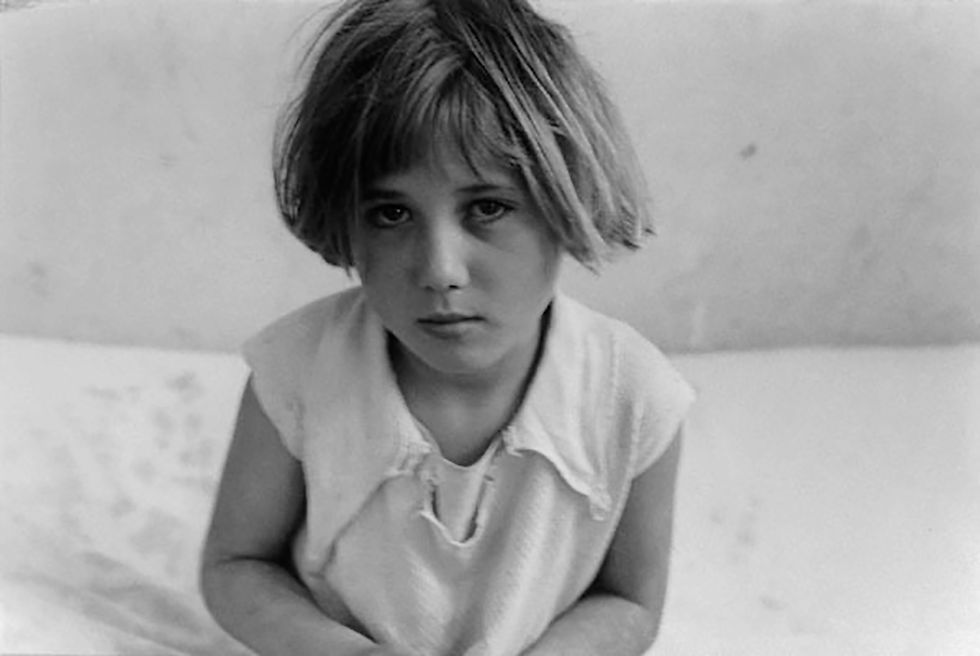
Durante la Guerra Civil Española, Ione llegó a Barcelona en septiembre de 1938 desde Perpiñán y con la ayuda del pintor Luis Quintanilla (1893-1978) recorrió durante dos meses el Frente del Ebro tomando contacto con el bando republicano. Realizó varios trabajos artísticos sobre esta experiencia, tanto dibujos como fotografías. La serie de dibujos fue expuesta en diciembre de ese mismo año en la Julien Levy Gallery de Nueva York en una muestra titulada “Spanish Children”. Poco después en 1939, visitó y tomó fotografías en el Campo de concentración de Argelès-sur-Mer, donde se refugiaron los españoles que cruzaron la frontera durante la contienda. Ese mismo año regresó a México y retrató en la Escuela España-México a “Los niños de Morelia”, más de 450 menores exiliados hijos de españoles republicanos que habían viajado solos en 1937.
Durante la década de los años 40, Ione Robinson regresó a Francia en varias ocasiones y trabajó como redactora de artículos sobre artistas para Vogue magazine.
En 1946 publicó en Nueva York su autobiografía bajo el título “A Wall to Paint on”, que dedicó a su hija. Este libro está escrito en formato epistolar y en él, a lo largo de más de 480 páginas, narra con todo detalle su periplo vital desde 1927 hasta 1939. Gracias a esta publicación, en la que incluyó fotografías personales y reproducciones de sus obras, se ha podido conocer su biografía y su obra.
Falleció en París el 4 de octubre de 1989 a los 79 años.
El MOMA de NY conserva dos dibujos suyos que fueron donados por la artista antes de morir. En 1993, el Museo de Arte Moderno de México adquirió su cuadro “La Familia” (1931).
En el año 2002, su nieto Christian John Dallett (1964-2017) editó un libro con el Instituto Mexicano de NY titulado “La retirada: the Spanish republican diaspora, 1938-1939: the paintings, drawings and photographs of Ione Robinson”.
En el año 2020, dentro del Festival PhotoEspaña, se inauguró en Santander una exposición titulada “Ione Robinson. Una mirada al exilio republicano”.
On this day, 3 October, 1910, the painter and photographer Ruth Ione Robinson was born in Portland, Oregon.
She was the daughter of George Cornelius Robinson (1883–1951) and Adeline Ione Bridgham (1888–1933), and had two brothers: George C. Robinson Jr. (1909–1933) and Fred Robinson (1913–1966). The family relocated to California around 1913.
Ione Robinson studied at the Otis Art Institute in Los Angeles from 1925 to 1926. In the summer of 1927, she attended the Summer Academy at the Pennsylvania Academy of the Fine Arts (PAFA) in Chester Springs. That same year, she moved to New York, initially working as an assistant to Austrian furniture designer Paul T. Frankl (1886-1958), and later for printmaker Rockwell Kent (1882-1971).
At age 18, she made her first trip to Paris in September 1928, using her time in Europe to visit Florence and Naples. In April 1929, she opened her first solo exhibition at the Weyhe Gallery in New York. By June 1929, driven by an ambition to paint murals, she traveled to Mexico, where she secured a position as an assistant to Diego Rivera on his fresco mural History of Mexico at the National Palace in Mexico City. During her six-month stay, Robinson temporarily lived with Italian photographer Tina Modotti (1896-1942), who photographed her on several occasions alongside Lola Álvarez Bravo (1903-1993). These friendships ignited her enduring passion for photography. While in Mexico, she met and married her first husband, Ukrainian-born writer Joe Freeman, though they divorced shortly thereafter.
Robinson returned to New York in late 1929. In 1931, she was awarded a Guggenheim Fellowship in Fine Arts, enabling her to return to Mexico for nearly a year until January 1932.
On 27 March 1933, at age 22, she married her second husband, John Dallett (1902-1975), the son of a Southern landowning family. Tragedy struck in August of that year when her mother and older brother died in a car accident, leaving her devastated. In 1935, she gave birth to her daughter, Anne Ione Dallett; however, the couple separated soon after, and custody was awarded to the father's family.
During the Spanish Civil War, Robinson arrived in Barcelona in September 1938 via Perpignan. Facilitated by painter Luis Quintanilla, she spent two months touring the Ebro Front, documenting the Republican side through drawings and photographs. Her drawing series was exhibited in December 1938 at the Julien Levy Gallery in New York under the title Spanish Children. Shortly after, in 1939, she visited and photographed the Argelès-sur-Mer concentration camp, which housed Spanish refugees fleeing across the border. Returning to Mexico that same year, she photographed the Niños de Morelia at the Escuela España-México—a group of over 450 exiled children of Spanish Republicans who had arrived unaccompanied in 1937.
Throughout the 1940s, Robinson traveled frequently to France, writing articles on artists for Vogue magazine. In 1946, she published her epistolary autobiography, A Wall to Paint On, dedicated to her daughter, detailing her life from 1927 to 1939. This publication, featuring personal photographs and artwork reproductions, remains a vital primary source for her life and career.
She passed away in Paris on 4 October 1989 at the age of 79.
Her artistic legacy endures through major public holdings and posthumous recognitions. The MoMA holds two drawings donated by the artist. The Museo de Arte Moderno in Mexico acquired her painting La Familia (1931) in 1993.
In 2002, her grandson, Christian John Dallett (1964-2017), edited “La retirada: the Spanish republican diaspora, 1938-1939: the paintings, drawings and photographs of Ione Robinson” with the Mexican Cultural Institute of New York.
In 2020, her work was featured at PHotoESPAÑA in Santander under the retrospective Ione Robinson. A Look at the Republican Exile.






Comentarios